Discover the complete guide to Sarhul Festival, the famous tribal spring festival of Jharkhand. Learn about its history, significance, rituals, traditions, celebrations, cultural importance, and tourism value.
Sarhul is one of the most important and widely celebrated tribal festivals of the Indian state of Jharkhand. Known as the festival of nature, Sarhul symbolizes the worship of trees, forests, the Earth, and the arrival of spring. It is mainly celebrated by tribal communities such as the Munda Tribe, Oraon Tribe, and Ho Tribe.
The word “Sarhul” is derived from two words: “Sar” meaning Sal tree and “Hul” meaning worship. The festival is celebrated when Sal trees bloom with beautiful white flowers, marking the beginning of a new season and agricultural cycle. Sarhul reflects the deep connection between tribal communities and nature.
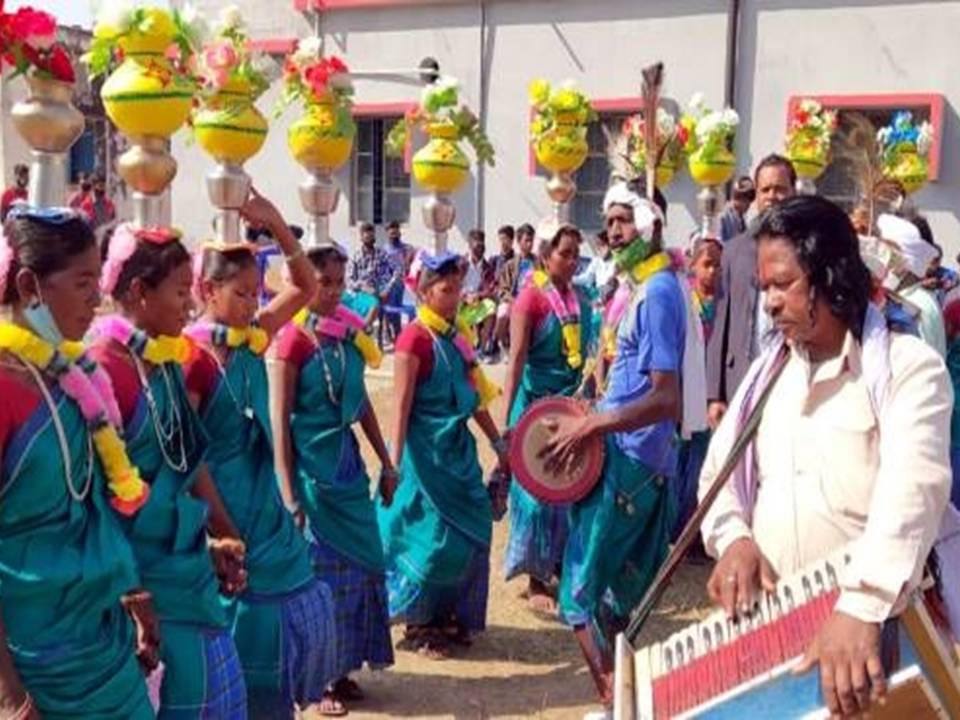
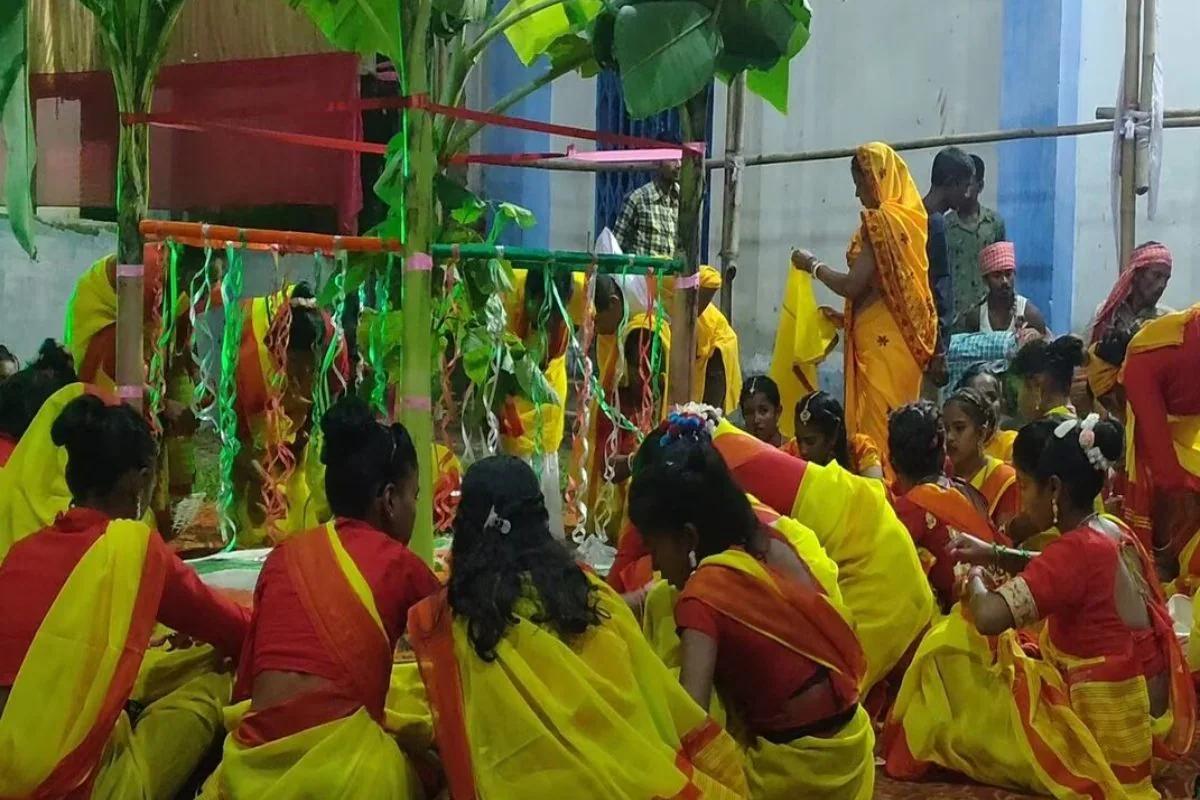
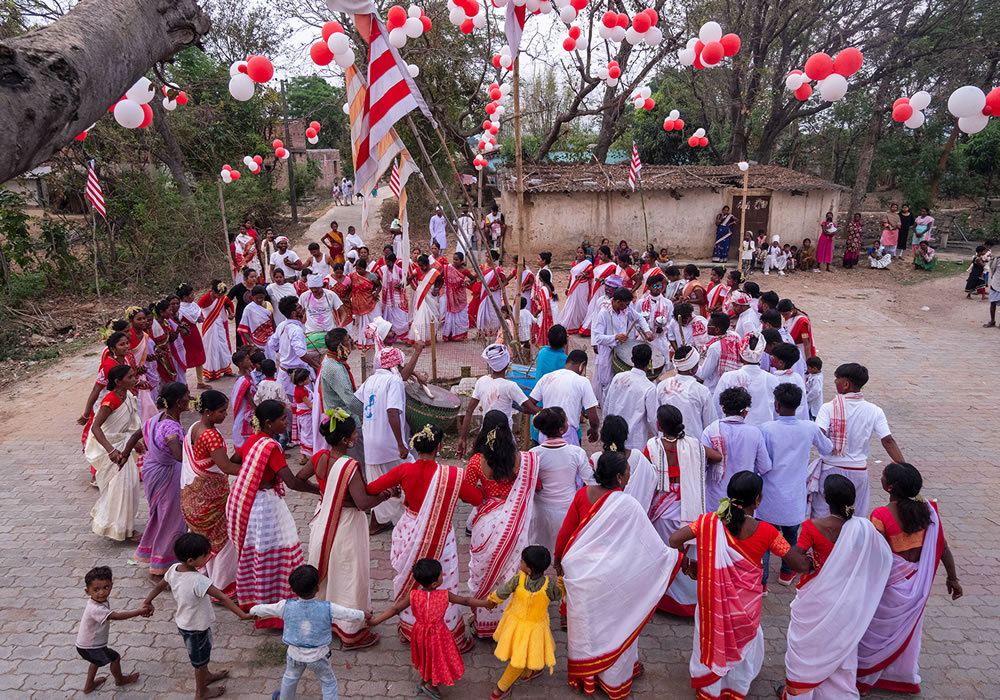
Every year, thousands of people across Jharkhand celebrate Sarhul with great enthusiasm through traditional dances, songs, rituals, community feasts, and processions. The festival is not only a religious occasion but also a celebration of tribal identity, cultural heritage, and environmental conservation.
Introduction About Sarhul Festival
Sarhul is often referred to as the “Festival of Flowers” because it coincides with the flowering of the Sal tree. It is celebrated during the Chaitra month of the Hindu calendar, generally falling between March and April.
The festival marks:
- Arrival of spring season
- Beginning of the new agricultural year
- Worship of nature and Earth
- Respect for forests and trees
- Community unity and social harmony
For tribal communities, nature is considered sacred. Trees, rivers, mountains, and forests are treated as living entities that provide life and sustenance. Sarhul is a way of expressing gratitude toward these natural elements.
History of Sarhul Festival
The history of Sarhul dates back centuries and is deeply rooted in the indigenous traditions of the tribal communities of eastern India.
Long before modern religions and organized institutions became dominant, tribal societies lived in close harmony with nature. They depended on forests for food, shelter, medicine, and livelihood.
To honor nature’s generosity, tribal ancestors developed festivals and rituals centered around seasonal changes. Sarhul emerged as one such festival, celebrating the blooming of the Sal tree and the renewal of life.
Over generations, Sarhul became a significant cultural tradition that preserved tribal values, customs, and beliefs.
Today, despite modernization, Sarhul remains one of the strongest symbols of tribal heritage in Jharkhand.
Significance of Sarhul Festival
1. Celebration of Nature
Sarhul highlights the importance of nature in human life. The festival reminds people to respect forests, trees, rivers, and the Earth.
2. Arrival of Spring
The blooming Sal flowers indicate the arrival of spring and the beginning of a new agricultural cycle.
3. Community Bonding
The festival brings together families, relatives, and entire villages. People participate collectively in rituals and celebrations.
4. Cultural Preservation
Sarhul helps preserve tribal traditions, language, music, dance, and folklore.
5. Environmental Awareness
The festival promotes environmental conservation and sustainable living.
The Sacred Sal Tree


The Sal tree holds immense importance in Sarhul celebrations.
Importance of the Sal Tree
- Considered sacred by tribal communities
- Symbol of prosperity and fertility
- Represents the relationship between humans and nature
- Provides timber, shade, and ecological benefits
During Sarhul, priests collect fresh Sal flowers and use them in rituals.
The flowering of the Sal tree is seen as a sign that nature is ready for a new season.
Deities Worshipped During Sarhul
The main deity worshipped during Sarhul is Dharti Mata (Mother Earth).
Other spiritual entities include:
- Village guardian spirits
- Ancestor spirits
- Forest deities
- Nature gods
The festival expresses gratitude for:
- Good harvests
- Rainfall
- Fertile land
- Health and prosperity
Role of the Pahan
The Pahan is the traditional tribal priest responsible for conducting Sarhul rituals.
Duties of the Pahan
- Performing prayers
- Offering sacrifices
- Collecting Sal flowers
- Blessing villagers
- Predicting agricultural conditions
The Pahan plays a central role in ensuring the spiritual success of the festival.
Sarna: The Sacred Grove
Sarhul rituals are usually performed in Sarna, the sacred grove of the village.
A Sarna is a protected forest area where tribal communities worship nature.
Importance of Sarna
- Spiritual center of the village
- Symbol of ecological conservation
- Sacred space for community rituals
- Home of village deities
Many villages in Jharkhand maintain Sarna groves even today.
Rituals of Sarhul Festival
Preparation
Days before the festival:
- Houses are cleaned
- Villages are decorated
- Traditional clothes are prepared
- Community gatherings are organized
Collection of Sal Flowers
The Pahan gathers fresh Sal flowers from nearby forests.
These flowers become the primary offering during worship.
Worship Ceremony
The Pahan performs rituals at the Sarna grove.
Offerings include:
- Sal flowers
- Rice
- Water
- Traditional rice beer (Handia)
Prayers are offered for prosperity, peace, and good harvests.
Community Blessings
After worship, villagers receive blessings and Sal flowers.
The flowers are often placed in homes as symbols of good fortune.
Traditional Dress During Sarhul


Traditional attire is an important part of Sarhul celebrations.
Women’s Dress
- White sarees with red borders
- Traditional ornaments
- Floral decorations
Men’s Dress
- Dhoti
- Kurta
- Turban
- Traditional accessories
The colorful costumes add beauty and cultural richness to the festival.
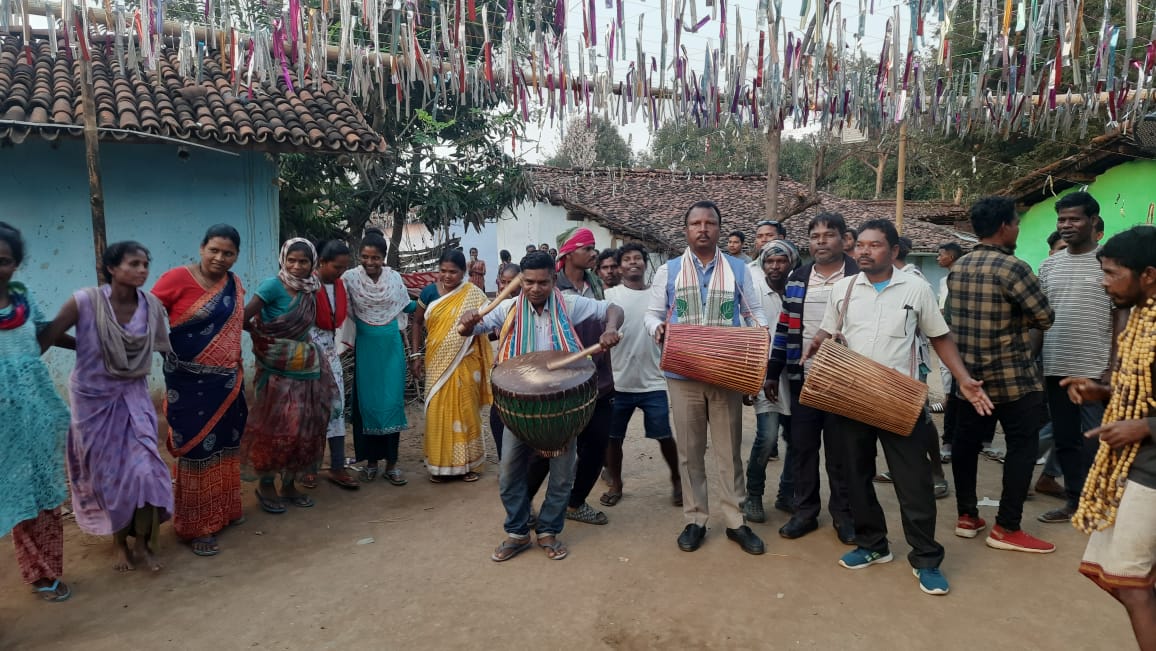
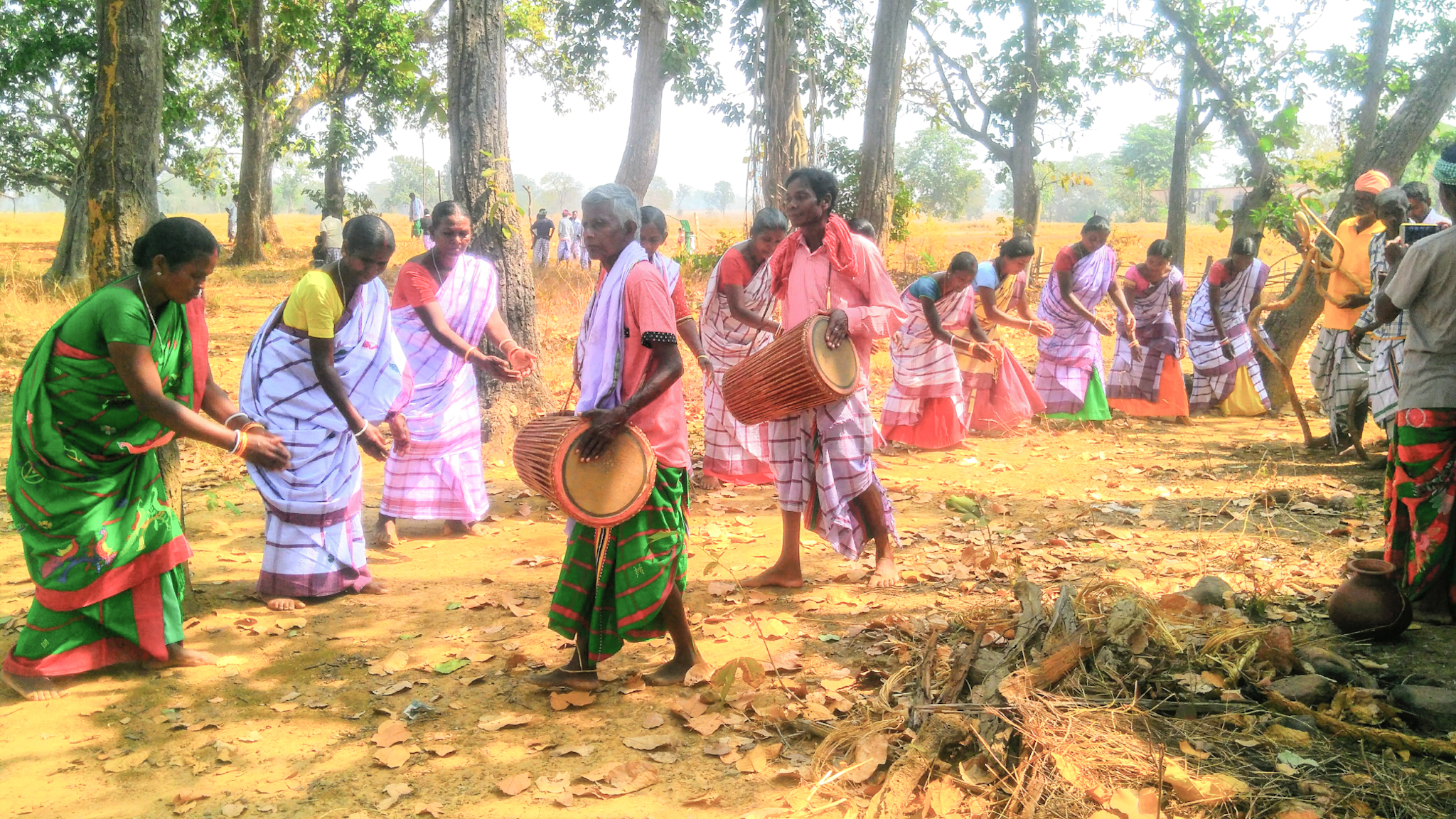
Sarhul Dance and Music
Dance and music are essential components of Sarhul.
Popular Instruments
- Mandar
- Nagara
- Dhol
- Flute
Traditional Dances
- Jadur Dance
- Paika Dance
- Tribal Folk Dance
Men and women dance together in groups, creating vibrant cultural performances.
The rhythmic beats of traditional instruments can be heard throughout villages and cities during the festival.
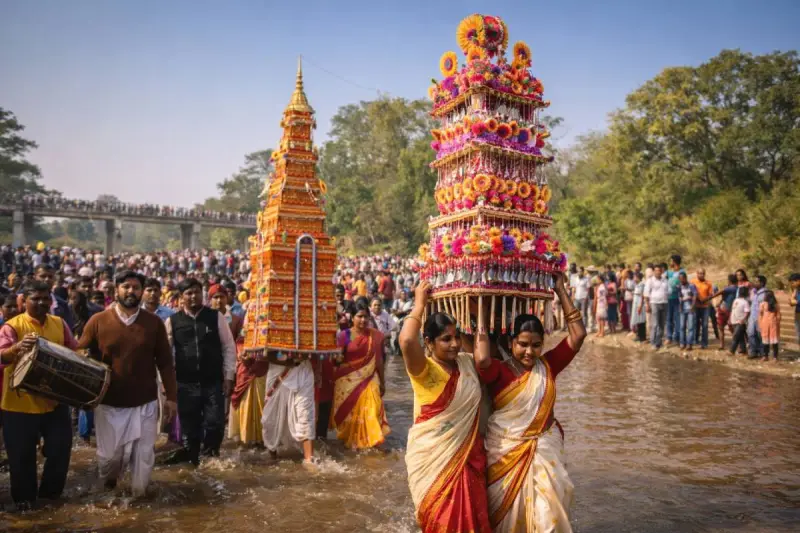
Sarhul Procession in Ranchi
One of the most spectacular Sarhul celebrations takes place in Ranchi.
Thousands of people participate in grand processions featuring:
- Traditional costumes
- Tribal dances
- Decorated vehicles
- Cultural performances
The procession showcases the rich cultural identity of Jharkhand’s tribal communities.
It attracts tourists, photographers, and researchers from across India.
Food and Feast During Sarhul
Food is an important aspect of Sarhul celebrations.
Popular dishes include:
- Rice
- Dal
- Tribal curries
- Bamboo shoot preparations
- Forest vegetables
Traditional beverages include Handia, a rice-based fermented drink commonly consumed during celebrations.
Community feasts strengthen social bonds and create a sense of togetherness.
Sarhul and Agriculture
Sarhul has a strong connection with agriculture.
The festival marks:
- Beginning of farming activities
- Preparation for sowing crops
- Hope for favorable weather
- Blessings for successful harvests
Farmers seek divine protection and agricultural prosperity during the festival.
Cultural Importance of Sarhul
Sarhul is more than a religious event.
It serves as:
- Cultural identity marker
- Heritage preservation tool
- Social gathering occasion
- Educational platform for younger generations
The festival teaches respect for nature and community values.
Sarhul and Environmental Conservation
One of the most remarkable aspects of Sarhul is its environmental message.
The festival encourages:
- Forest protection
- Tree conservation
- Sustainable living
- Ecological balance
In modern times, Sarhul has become a symbol of environmental awareness.
Many organizations use the festival to promote tree plantation and conservation programs.
Tourism Potential of Sarhul Festival
Sarhul has significant tourism potential.
Visitors can experience:
- Tribal culture
- Traditional dances
- Folk music
- Authentic cuisine
- Indigenous rituals
Tourists visiting Jharkhand during Sarhul gain insight into one of India’s oldest living cultural traditions.
Popular destinations during Sarhul include:
- Ranchi
- Khunti
- Gumla
- Simdega
- Lohardaga
Sarhul in Modern Times
Today, Sarhul is celebrated in both rural and urban areas.
Modern celebrations include:
- Cultural programs
- Awareness campaigns
- Youth participation
- Social media promotion
- Cultural exhibitions
Despite modernization, the festival retains its traditional essence.
Challenges Facing Sarhul Traditions
Some challenges include:
- Urbanization
- Deforestation
- Cultural dilution
- Migration of youth
- Loss of traditional knowledge
Efforts are being made to preserve Sarhul through cultural organizations, educational programs, and government initiatives.
Why Sarhul Matters Today
Sarhul offers valuable lessons for modern society:
- Respect nature
- Protect forests
- Preserve cultural heritage
- Promote community harmony
- Live sustainably
The festival demonstrates how humans can coexist peacefully with the natural environment.
Sarhul Festival FAQs
1. What is Sarhul Festival?
Sarhul is a traditional tribal festival celebrated mainly in Jharkhand to worship nature, the Earth, and the sacred Sal tree. It marks the arrival of spring and the beginning of a new agricultural season.
2. Why is Sarhul called the Festival of Flowers?
Sarhul is known as the Festival of Flowers because it is celebrated when the Sal tree blooms with beautiful white flowers, symbolizing new life, prosperity, and renewal.
3. When is Sarhul Festival celebrated?
Sarhul is usually celebrated during March or April, depending on the flowering of the Sal trees and local tribal customs.
4. Which tribes celebrate Sarhul?
The festival is primarily celebrated by the Munda, Oraon, Ho, and several other indigenous tribal communities of Jharkhand and neighboring regions.
5. What is the significance of the Sal tree in Sarhul?
The Sal tree is considered sacred and represents fertility, prosperity, and the close relationship between humans and nature. Sal flowers are used in the main worship rituals.
6. Who conducts the Sarhul rituals?
The rituals are conducted by a village priest known as the Pahan, who leads prayers and offers blessings for the community’s well-being and agricultural success.
7. What is a Sarna?
A Sarna is a sacred grove or forest area where tribal communities worship nature and perform important religious ceremonies, including Sarhul rituals.
8. How is Sarhul celebrated?
Sarhul is celebrated through prayers, offerings of Sal flowers, traditional dances, folk music, community feasts, and colorful processions.
9. What traditional foods are prepared during Sarhul?
People enjoy rice-based dishes, local vegetables, tribal delicacies, and traditional beverages such as Handia during the festival.
10. What is the cultural importance of Sarhul?
Sarhul helps preserve tribal traditions, folklore, music, dance, and community values while strengthening cultural identity.
11. How is Sarhul connected to agriculture?
The festival marks the beginning of the agricultural cycle and seeks blessings for good rainfall, fertile land, and a successful harvest season.
12. What traditional dances are performed during Sarhul?
Popular tribal dances performed during Sarhul include Jadur Dance, Paika Dance, and other regional folk dances accompanied by traditional drums and musical instruments.
13. Where is Sarhul celebrated most prominently?
Sarhul is widely celebrated across Jharkhand, especially in Ranchi, Khunti, Gumla, Simdega, and Lohardaga.
14. What message does Sarhul Festival convey?
Sarhul promotes environmental conservation, respect for nature, social harmony, and sustainable living.
15. Why is Sarhul important for tourism in Jharkhand?
The festival attracts tourists interested in tribal culture, traditional music, folk dances, indigenous customs, and the rich cultural heritage of Jharkhand.
16. Is Sarhul a public holiday in Jharkhand?
Yes, Sarhul is recognized as an important festival in Jharkhand, and the state government generally declares a public holiday to allow people to participate in celebrations.
17. What are the main symbols of Sarhul?
The main symbols of Sarhul include Sal flowers, sacred groves (Sarna), traditional drums, tribal dances, and community gatherings.
18. Can tourists attend Sarhul celebrations?
Yes, tourists are welcome to witness Sarhul celebrations and experience the unique tribal traditions, cultural performances, and festive atmosphere.
19. How does Sarhul contribute to environmental awareness?
The festival emphasizes the protection of forests, conservation of trees, and the importance of maintaining ecological balance.
20. Why is Sarhul considered a unique festival in India?
Sarhul is unique because it is deeply rooted in tribal traditions and focuses primarily on the worship of nature, making it one of India’s most distinctive indigenous festivals.
Conclusion
Sarhul is one of the most vibrant and meaningful festivals of Jharkhand. Celebrated primarily by tribal communities, it represents the deep bond between humans and nature. Through the worship of Sal trees, Mother Earth, and natural forces, Sarhul conveys powerful messages of environmental conservation, gratitude, and cultural pride.
The festival’s colorful dances, traditional music, sacred rituals, and community feasts make it a unique cultural experience. As Jharkhand continues to develop, preserving the traditions of Sarhul becomes increasingly important for protecting both tribal heritage and ecological values.
Sarhul is not just a festival—it is a celebration of life, nature, culture, and community.
About Us – JharTravel
Welcome to JharTravel — your trusted travel companion for discovering the hidden beauty, culture, history, and tourism of Jharkhand and across India.
My name is Md Mokarram, and I am proudly from Jharkhand. I created JharTravel with a simple mission: to help travelers explore the real beauty of Jharkhand, Bihar, and other amazing destinations through authentic travel guides, hotel information, food blogs, pilgrimage details, and local experiences.
At JharTravel, we believe that every destination has a unique story. From waterfalls, hills, temples, and forests to street food, local culture, and budget travel tips — we provide informative and easy-to-understand travel content for every type of traveler.
Our website covers:
- Travel guides for famous and hidden destinations
- Tourist places in Jharkhand, Bihar, and India
- Hotels, lodges, and homestay recommendations
- Religious and pilgrimage travel guides
- Street food and local cuisine blogs
- Travel tips, itineraries, and budget guides
- SEO-friendly and regularly updated travel articles
Whether you are planning a family trip, solo adventure, spiritual journey, or weekend getaway, JharTravel helps you make your journey easier and more memorable.
As a traveler and blogger from Jharkhand, I personally enjoy exploring new places and sharing genuine travel experiences with readers. Every article on JharTravel is written with passion, research, and the goal of helping travelers discover the beauty of India.
Thank you for visiting JharTravel and being part of this travel journey.
Contact Information
- Founder: Md Mokarram
- Website: https://jhartravel.com/
- Location: Jharkhand
“Final Two Words”
Thank you for visiting JharTravel, a travel platform created with passion and dedication by Md Mokarram from Jharkhand. Our goal is to provide helpful, accurate, and easy-to-read travel information for travelers who want to explore the beauty of Jharkhand. From hidden tourist spots and religious places to hotels, food, and travel tips, we aim to make every journey memorable and budget-friendly. We truly appreciate your support and trust in our content. Keep exploring new destinations with JharTravel and make every trip an unforgettable experience filled with adventure, culture, and beautiful memories.
- 1 Discover the complete guide to Sarhul Festival, the famous tribal spring festival of Jharkhand. Learn about its history, significance, rituals, traditions, celebrations, cultural importance, and tourism value.
- 2 1. Celebration of Nature
- 3 2. Arrival of Spring
- 4 3. Community Bonding
- 5 4. Cultural Preservation
- 6 5. Environmental Awareness
- 7 Preparation
- 8 Collection of Sal Flowers
- 9 Worship Ceremony
- 10 Community Blessings
- 11 Sarhul Festival FAQs
- 12 About Us – JharTravel
- 13 “Final Two Words”